
It seems like Nintendo decided to put the Switch 2 back into the Dock of Time and return to November 1998 for their next Zelda release, as it is a remake of Link's first step into the third dimension, Ocarina of Time. The original game holds a special place in my heart when it comes to the Zelda series, as not only was it the first Zelda game I played to completion, it was one of the first games I ever owned. With this in mind, I deemed it fitting to go back and revisit Hyrule Field and test out the PC de-compilation of the N64 classic. If you aren't aware, de-compilation in layman's terms (take this with a grain of salt, it's still witchcraft in my eyes!) is pulling the original game apart to its source code and re-compiling it to run natively on PC. This allows for higher frame rates, resolution and fancy QoL changes such as having more item slots on the d-pad or full camera control. Does this bring this timeless game into the future? Let's see!
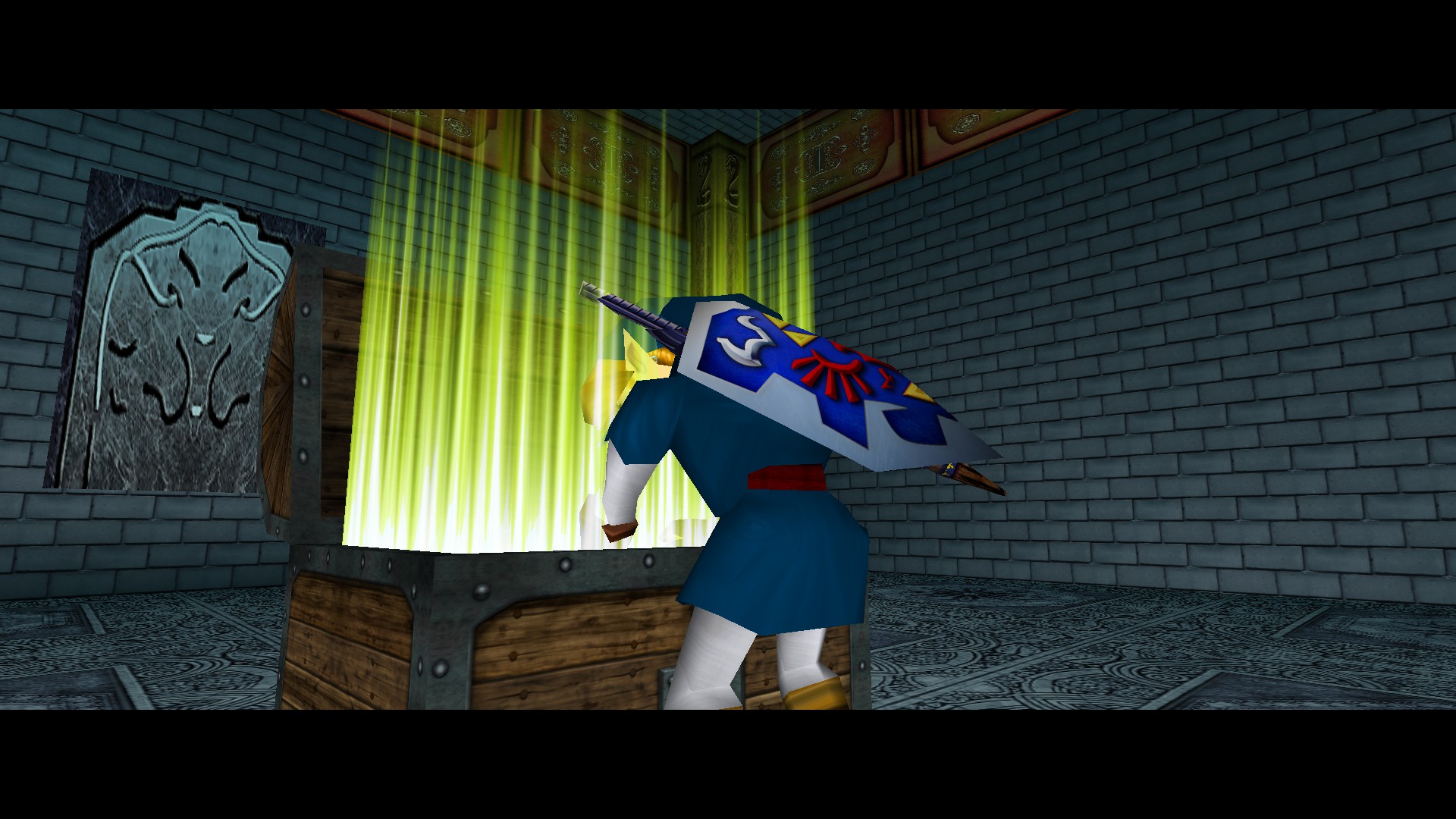
Once you’re back in Link's shoes, it’s remarkable how much of Ocarina of Time still holds up. Z-targeting was the big party trick back in 1998, and locking onto a Stalfos or Tektite or those weird... eyeball things, circling it and waiting for an opening still feels great nearly thirty years later. There’s a reason almost every 3D action game since has borrowed the lock-on concept. The loop hasn’t aged a day either: find a dungeon, get lost in said dungeon, find the item that solves said dungeon, then use it to wipe the floor with the dungeon's boss. I know there are some that have the whole "the item you get in this dungeon is used for the rest of the dungeon and never again therefore bad game design" shtick, but I just find it to be untrue. With the exception of some items (I'm looking at you, boomerang) you'll still be using hookshots, bows, bombs and bombchus long after you've opened the chest they came in.
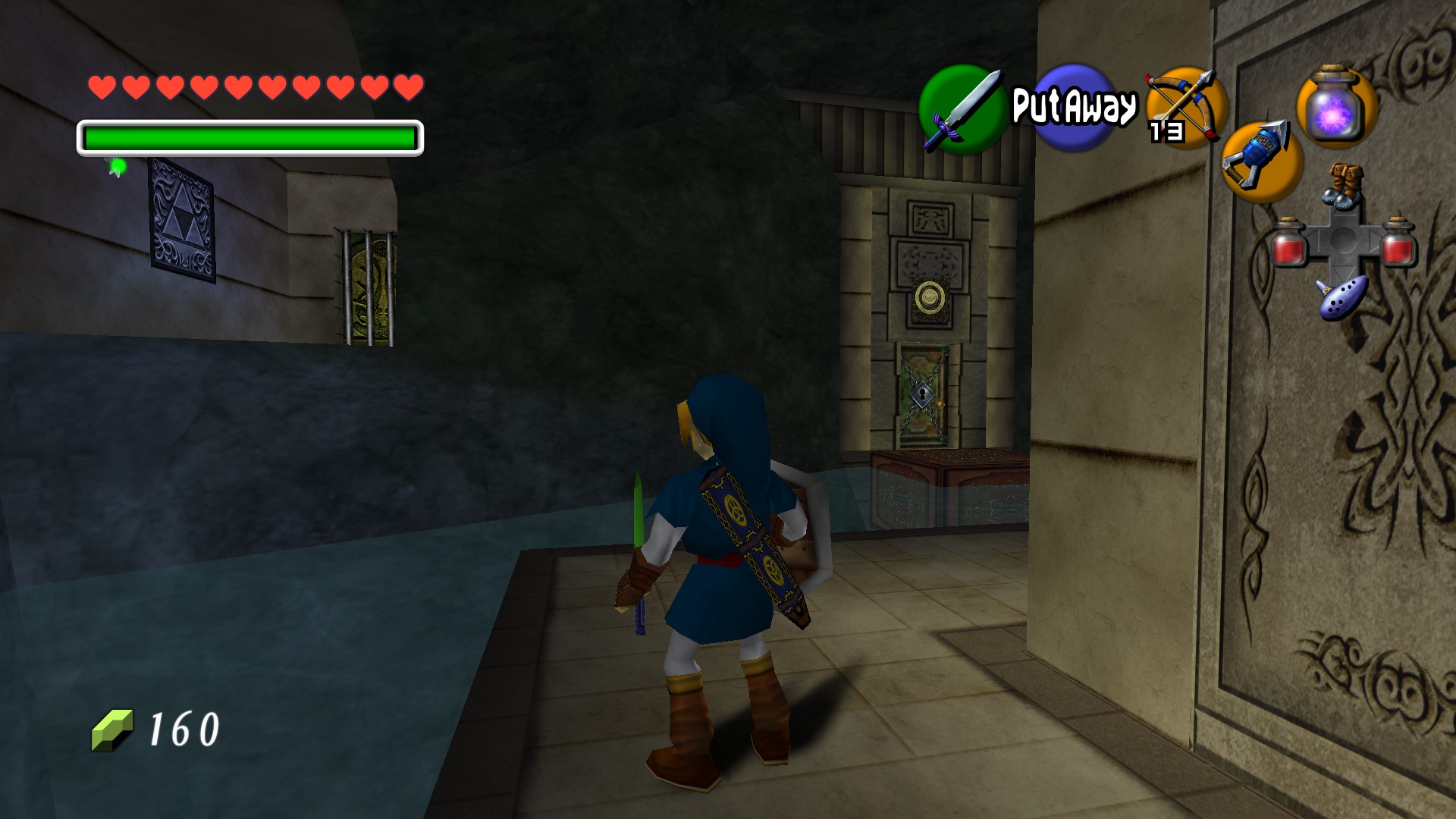
The de-compilation really earns its keep with the stuff the N64 never let you fix. Putting the Ocarina & bottles on the d-pad frees up most if not all the C-buttons, so I’m no longer juggling items through the pause menu every five minutes. The controls are still a touch stiff in places (Link decides when he jumps, not you), but that’s part of the charm... mostly.
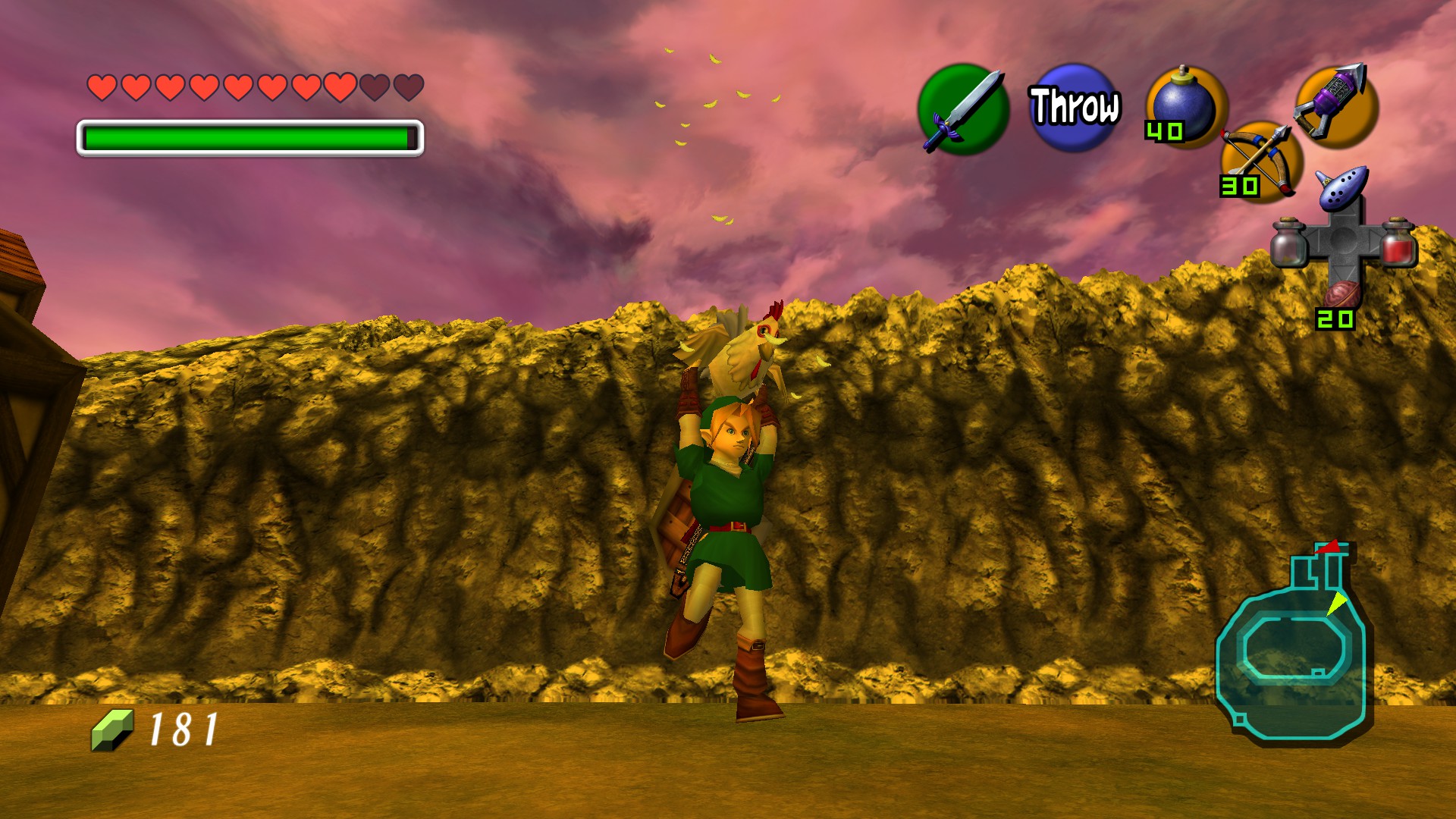
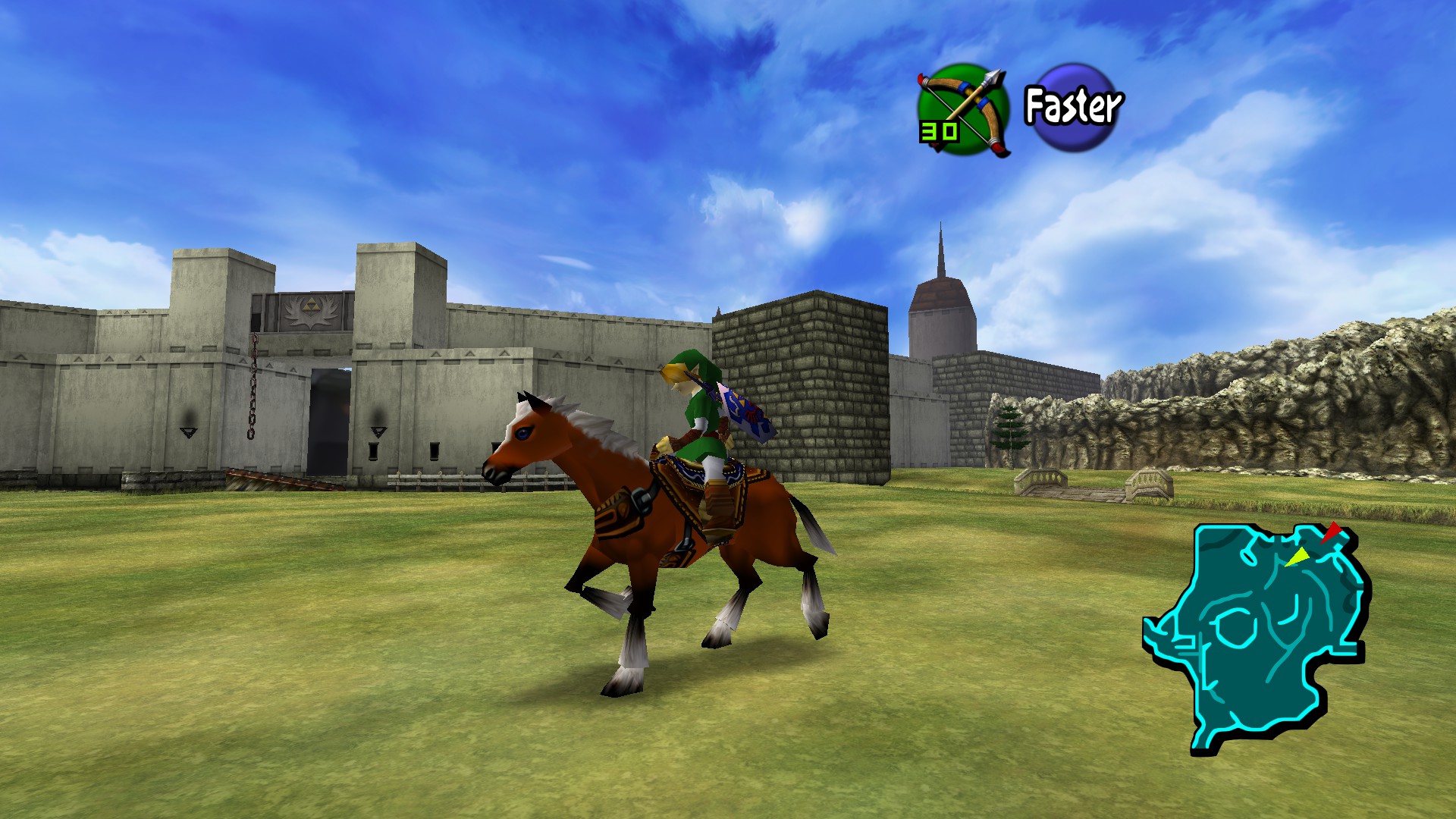
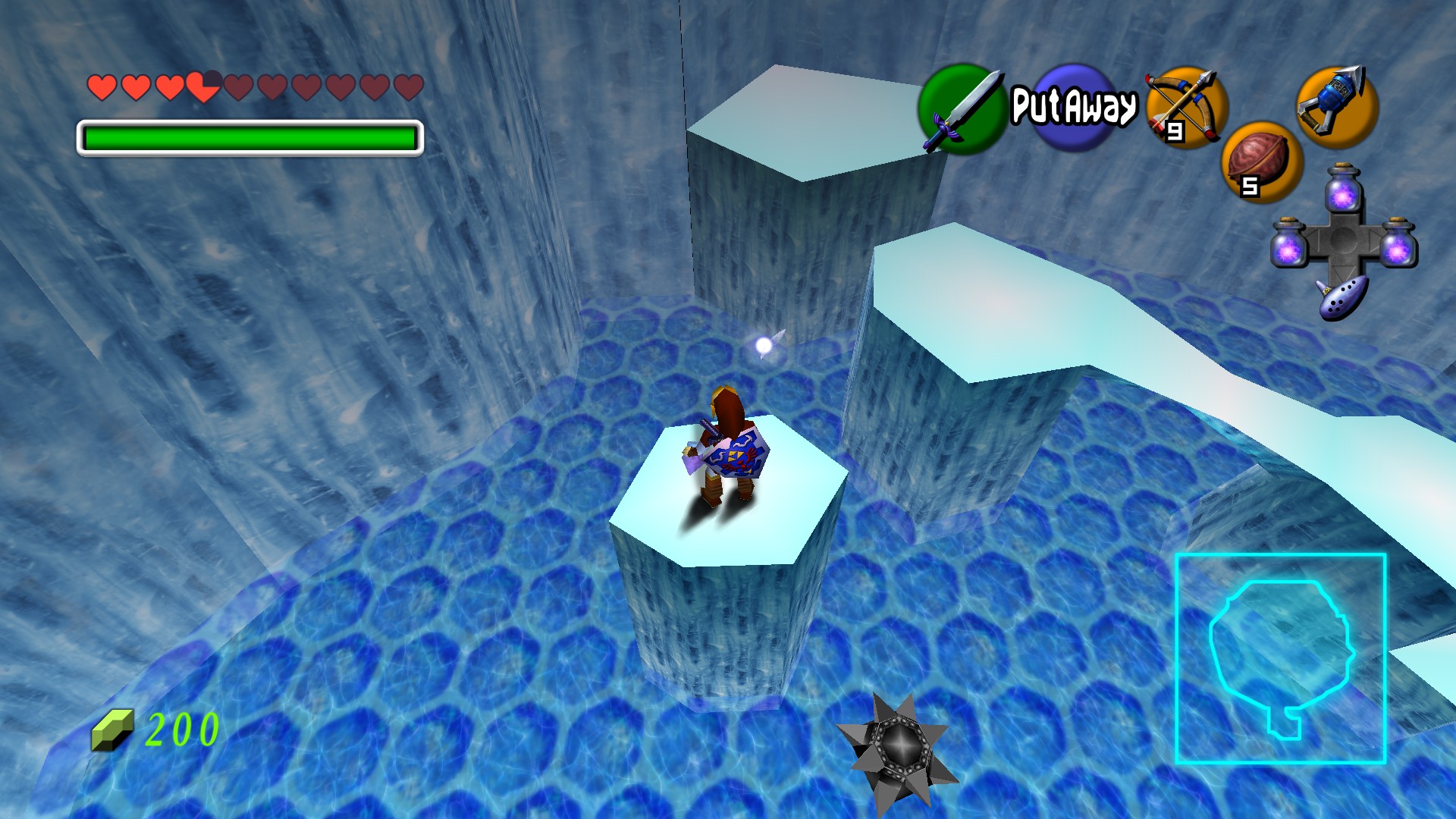
Looks-wise, the de-compilation is the real star of the show, or I guess Triforce of Power? Ocarina of Time was never meant to run with crisp high resolution, a frame rate the N64 could only dream of, and widescreen that actually lets you see Hyrule Field rather than a foggy slice of it. Turning around a corner without the game chugging feels almost dirty, but in the best way. There’s also a settings menu packed with toggles that let you tweak as much or as little as you like, so you can keep the game feeling authentic or go full modern. What all that clarity does highlight, though, is just how muddy Ocarina’s tone is compared with other Zelda games. Where later games such as Wind Waker are bright and bouncy, and Breath of the Wild is all soft and calm with its natural vistas, Ocarina is browns, greys and murky greens, with a melancholy that the sharper picture only makes more obvious. Honestly, I think that’s part of why it stuck with me as a kid, that and the Bottom of the Well in Kakariko Village being a straight up torture chamber too, obviously.
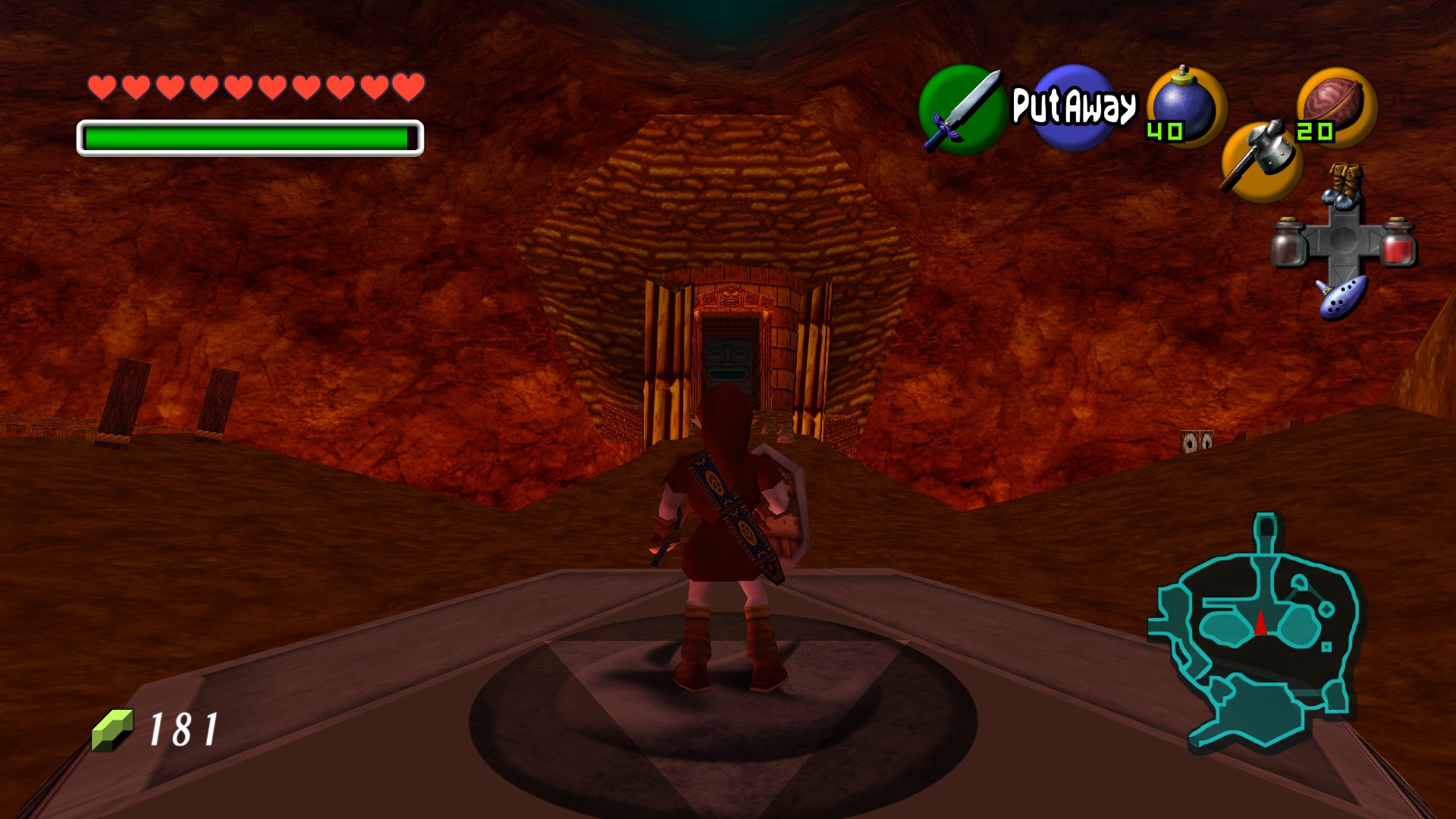
Okay, this is the bit you’ve all been waiting to read about. We have to talk about the Water Temple, the most famous dungeon of all time, and one of the most hated as well. I’ll be fair to it, I get what Nintendo were going for. If you ask me, the first three dungeons as child and adult Link are built around the Triforce. The Deku Tree and the Forest Temple are creepy crypts there to test your courage. Dodongo’s Cavern and the Fire Temple are all monsters, bombs and hammers, testing your power. That leaves Jabu-Jabu and the Water Temple as twisting mazes built to test your wisdom. It’s a clever bit of design, and I respect it. I just don’t enjoy it.
The de-compilation does help. Being able to stick the Iron Boots on the d-pad instead of diving into the pause menu every thirty seconds takes a lot of the sting out. But even without the menu faff, the Water Temple is still a chore. Raising and lowering the water, backtracking through rooms you’ve already cleared and hunting for that one small key you just cannot find is exactly the point where turning the game off becomes a real possibility. That goes for new players and returning ones alike. Wisdom, apparently, is mostly patience, which evidently I do not have.
So, does the de-compilation bring Ocarina of Time into the future? For the most part, yes. Water Temple aside, coming back to Hyrule after all these years felt less like replaying an old game and more like visiting somewhere I grew up. Everything feels a little less grandiose and a little smaller, but the feelings are still as strong as ever. The sharper picture, the smoother frame rate and the quality-of-life tweaks strip away a lot of the N64 friction, which leaves the bits that made it special in the first place. That means the dungeons, the music, and that feeling of stepping out into Hyrule Field for the first time. If you’ve never played it, this is a brilliant way in. If you’re a returning player like me, it’s a reminder of why this game shaped so many of us. Whatever Nintendo do with the remake, the original has nothing to prove.
 Somewhere out there, the Running Man is still waiting for a race I’ll never win.